


Some error occured while loading the Quick View. Please close the Quick View and try reloading the page.
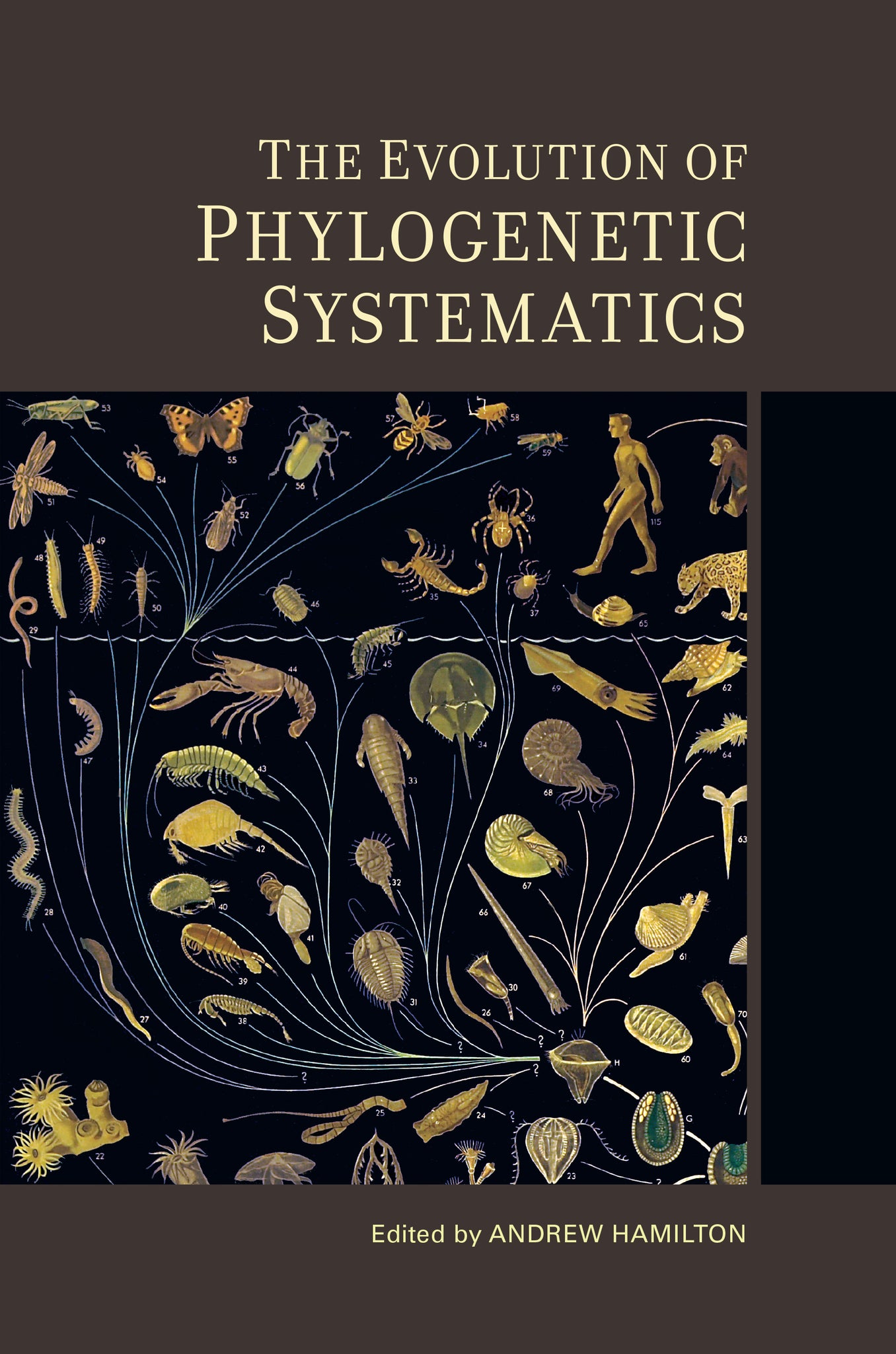
The Evolution of Phylogenetic Systematics aims to make sense of the rise of phylogenetic systematics—its methods, its objects of study, and its theoretical foundations—with contributions from historians, philosophers, and biologists. This volume articulates an intellectual agenda for the study of systematics and taxonomy in a way that connects classification with larger historical themes in the biological sciences, including morphology, experimental and observational approaches, evolution, biogeography, debates over form and function, character transformation, development, and biodiversity. It aims to provide frameworks for answering the question: how did systematics become phylogenetic?

Price: $65.00
Pages: 320
Publisher: University of California Press
Imprint: University of California Press
Series: Species and Systematics
Publication Date:
09 November 2013
Trim Size: 9.00 X 6.00 in
ISBN: 9780520276581
Format: Hardcover
BISACs:
"Phylogenetic Systematics has become a patchwork of attitudes, concepts, and methods, with regional traditions that can only be understood against the historical background of the impact of influential scientists. This book can help to escape intellectual endemisms, to remember what has already been discussed in the past, and to learn from errors that do not improve even when they are frequently repeated. . . . Recommend[ed] . . . to all students and reseachers interested in Phylogenetic Systematics."
Andrew Hamilton is Associate Dean in the Honors College at the University of Houston.
List of Contributors
Introduction
Andrew Hamilton
Part One. Historical Foundations
1. Reflections on the History of Systematics
Robert E. Kohler
2. Willi Hennig’s Part in the History of Systematics
Michael Schmitt
3. Homology as a Bridge between Evolutionary Morphology, Developmental Evolution, and Phylogenetic Systematics
Manfred D. Laubichler
Part Two. Conceptual Foundations
4. Historical and Conceptual Perspectives on Modern Systematics: Groups, Ranks, and the Phylogenetic Turn
Andrew Hamilton
5. The Early Cladogenesis of Cladistics
Olivier Rieppel
6. Cladistics at an Earlier Time
Gareth Nelson
7. Patterson’s Curse, Molecular Homology, and the Data Matrix
David M. Williams and Malte C. Ebach
8. History and Theory in the Development of Phylogenetics in Botany: Toward the Future
Brent D. Mishler
Part Three. Technology, Concepts, and Practice
9. Well-Structured Biology: Numerical Taxonomy’s Epistemic Vision for Systematics
Beckett Sterner
10. A Comparison of Alternative Form-Characterization: Approaches to the Automated Identification of Biological Species
Norman MacLeod
11. The New Systematics, the New Taxonomy, and the Future of Biodiversity Studies
Quentin Wheeler and Andrew Hamilton
Index
Introduction
Andrew Hamilton
Part One. Historical Foundations
1. Reflections on the History of Systematics
Robert E. Kohler
2. Willi Hennig’s Part in the History of Systematics
Michael Schmitt
3. Homology as a Bridge between Evolutionary Morphology, Developmental Evolution, and Phylogenetic Systematics
Manfred D. Laubichler
Part Two. Conceptual Foundations
4. Historical and Conceptual Perspectives on Modern Systematics: Groups, Ranks, and the Phylogenetic Turn
Andrew Hamilton
5. The Early Cladogenesis of Cladistics
Olivier Rieppel
6. Cladistics at an Earlier Time
Gareth Nelson
7. Patterson’s Curse, Molecular Homology, and the Data Matrix
David M. Williams and Malte C. Ebach
8. History and Theory in the Development of Phylogenetics in Botany: Toward the Future
Brent D. Mishler
Part Three. Technology, Concepts, and Practice
9. Well-Structured Biology: Numerical Taxonomy’s Epistemic Vision for Systematics
Beckett Sterner
10. A Comparison of Alternative Form-Characterization: Approaches to the Automated Identification of Biological Species
Norman MacLeod
11. The New Systematics, the New Taxonomy, and the Future of Biodiversity Studies
Quentin Wheeler and Andrew Hamilton
Index